
























































Access Denied
IMPORTANT! If you’re a store owner, please make sure you have Customer accounts enabled in your Store Admin, as you have customer based locks set up with EasyLockdown app. Enable Customer Accounts


Why Restaurants Prefer Wholesale Indian Grocery Suppliers
Posted By Anjaline Jayakumari
on
Ask any restaurant owner what keeps them up at night, and sourcing is usually near the top of the list, not the cooking, not even the staff, but whether the delivery of rice, spices, and lentils actually shows up before Friday service. This is the real reason restaurants gravitate toward a dedicated Indian grocery supplier UK kitchens can depend on, rather than piecing together orders from three or four different places.
Most blogs on this topic talk about “authenticity” and “quality ingredients” and stop there. That’s not wrong, but it’s not what actually drives a restaurant’s purchasing decision either. Let’s get into what does.
It’s Not About Authenticity. It’s About Consistency.
A curry that tastes slightly different every week isn’t a quality problem, it’s a sourcing problem. Restaurants that use the same masala blend, the same variety of rice, and the same brand of ghee batch after batch are the ones whose regulars keep coming back, because the dish tastes the way they remember it.
This is why restaurants are far less price-sensitive on their grocery supply than most people assume. A 5% saving from switching suppliers isn’t worth it if the new batch of garam masala tastes noticeably different and a regular customer notices. Restaurants pick a restaurant grocery supplier and stay loyal to them for exactly this reason, switching costs aren’t just financial, they’re about protecting the dish itself.
Demand for Indian Flavours Isn’t Slowing Down
Indian and South Asian cuisine remain among the strongest-growing cuisine categories in the UK right now, with Indian cuisine motivations up roughly 14% and South Asian up over 10% across UK consumer demand in the past year. That’s not a niche trend, it’s mainstream growth, and it means restaurants serving Indian food are under more pressure than ever to keep up with volume without compromising on the quality customers are increasingly seeking out.
For a restaurant scaling up covers or opening a second location, that pressure lands directly on the supply chain. You can’t grow a menu faster than your supplier can grow with you.
What Restaurants Actually Look For in a Supplier?
1. Bulk pricing on high-turnover items Rice, lentils (dal), cooking oil, and onions move fast in any working kitchen. Restaurants need catering supplies in bulk formats, 25kg sacks, 15–20 litre oil tins, not retail-sized packaging that forces staff to open ten bags to fill one pot.
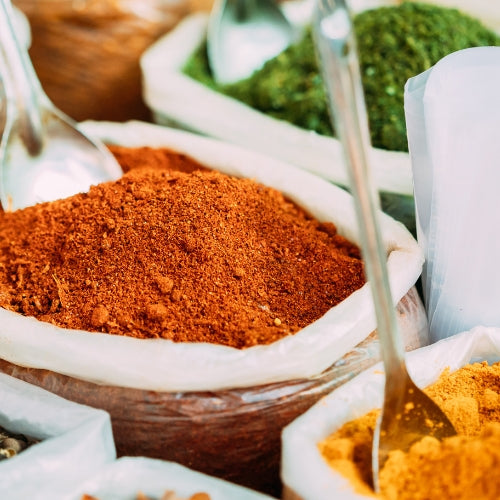
2. Wholesale spices UK kitchens can trust for batch consistency Spice quality is where restaurants get most particular. Freshly ground versus pre-ground, whole versus powder, and, critically, batch-to-batch consistency in blends like garam masala, tandoori masala, or panch phoron. A restaurant that builds its signature dish around a specific spice profile can’t afford a supplier who changes their grind or ratio without warning.
3. Delivery reliability that matches kitchen prep schedules Restaurants prep ahead of service, not during it. A supplier who delivers on a fixed, predictable schedule, and communicates early if something’s delayed, is worth more to a kitchen than one offering marginally lower prices with unreliable timing.
4. Flexibility across ingredient categories: Restaurants don’t just want rice from one supplier and spices from another. Sourcing frozen parathas, pickles, ghee, dals, and spices from a single Indian grocery supplier UK-wide cuts down on admin, invoicing, and the number of delivery windows a kitchen has to manage weekly.
5. Certification and compliance documentation With food safety and packaging compliance in the UK getting stricter, including new Extended Producer Responsibility packaging rules taking full effect this year, restaurants increasingly ask suppliers for documentation upfront rather than dealing with it reactively during an inspection.
The Cost of Getting This Wrong
Restaurants that source badly don’t usually fail dramatically, they erode slowly. A slightly inconsistent dal here, a late basmati delivery during a busy weekend there, a spice blend that tastes “off” for one batch. None of it is catastrophic on its own, but it chips away at the exact reputation a restaurant spent years building.
This is why experienced restaurant owners talk about their grocery supplier the way they talk about their head chef, as someone whose reliability is directly tied to the business’s reputation, not just a line item in the accounts.
What This Means If You’re Choosing a Supplier
If you’re running a restaurant and evaluating suppliers, the questions worth asking aren’t about price alone. Ask how they handle a missed delivery. Ask whether their spice blends are made in-house or bought in from a third party (blends change more when sourced from multiple places). Ask if they can grow with you if you open a second site.
A dependable Indian grocery supplier UK restaurants can build a menu around isn’t just selling ingredients, they’re effectively part of the kitchen team, even if they never set foot in it.
As an Indian wholesale grocery store online and Indian wholesale supermarket online, we work directly with restaurants and caterers who need exactly this: consistent bulk supply, reliable delivery, and ingredients that taste the same in month twelve as they did in month one.
Related Posts


Choose the Right Vinayagar Chaturthi Kit for Your Customers
Vinayagar Chaturthi is an important occasion for Hindu families across the UK. In the days leading up to the...
Read More

Vinayagar Chaturthi 2026: Wholesale Products UK Retailers Should Stock
Vinayagar Chaturthi is a special festival for Hindu families in the UK. It celebrates the birth of Lord Vinayagar,...
Read MoreInvalid password
Enter